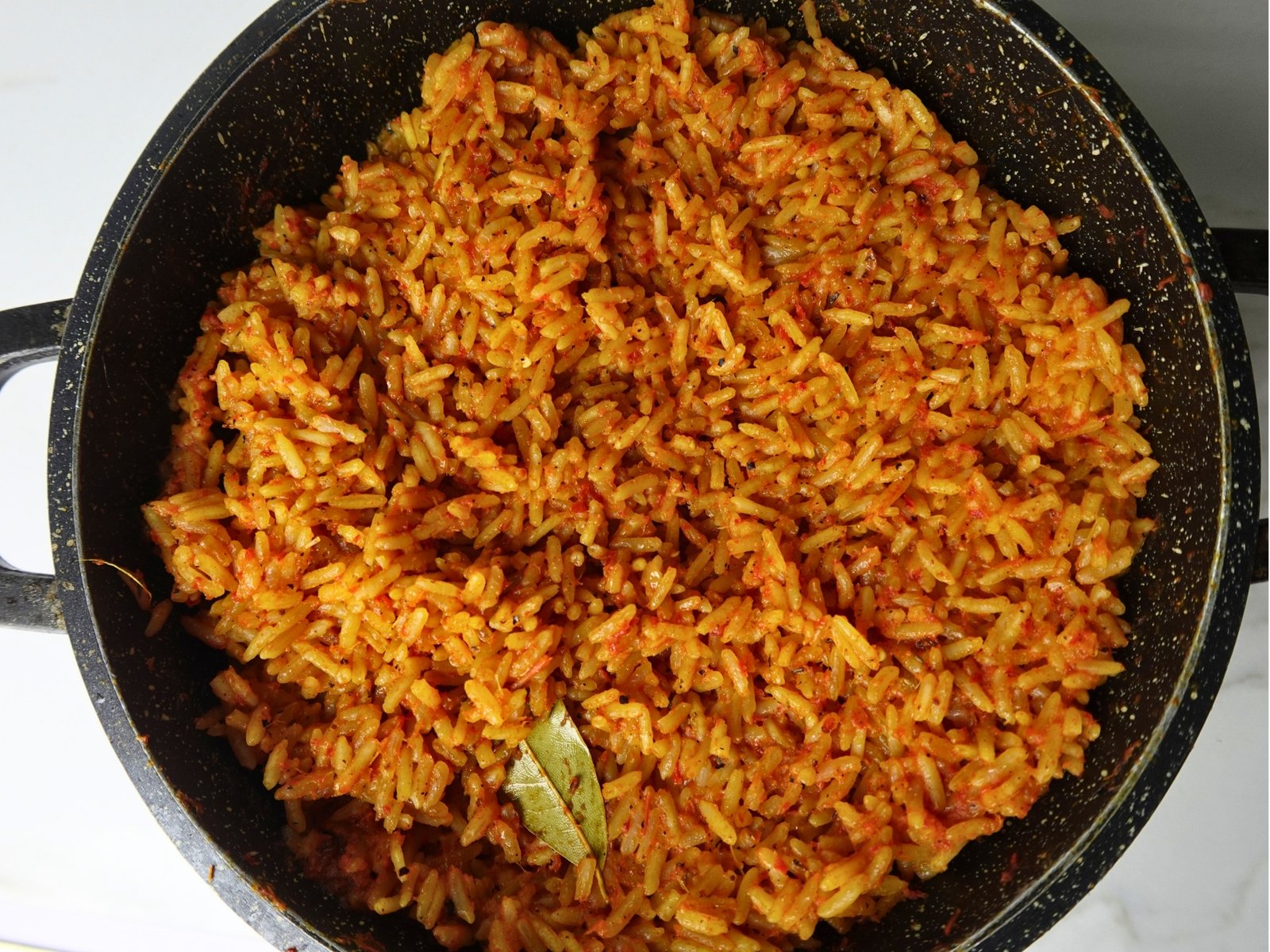
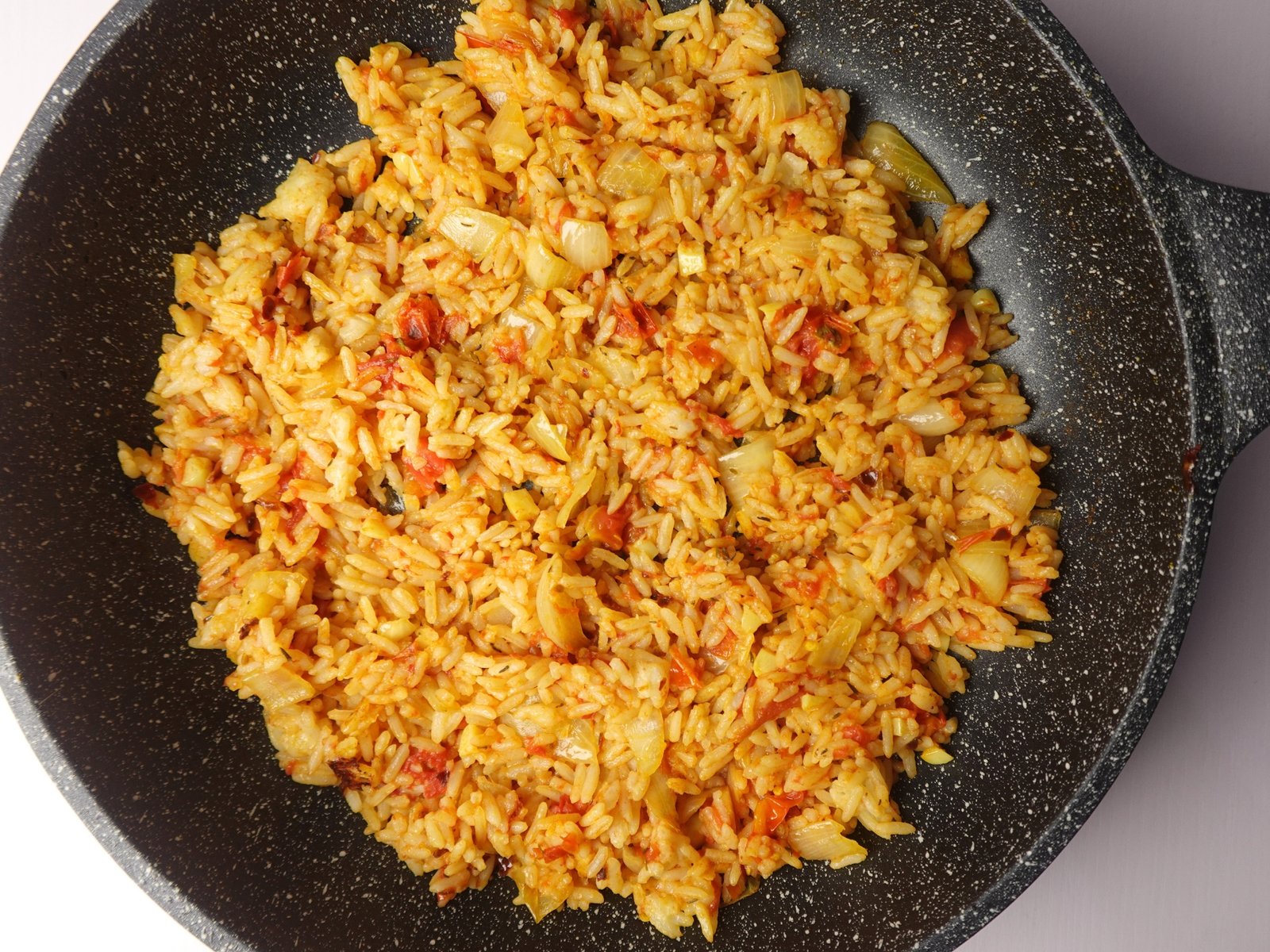
Nigerian jollof rice is a rich, flavorful rice dish made with tomatoes, peppers, onions, spices, and long-grain parboiled rice. It is one of those meals that can easily turn a simple lunch or dinner into something special. A true Nigerian though will eat this any time of day.
For this version, we’re taking the smoky flavor up a notch by charring the vegetables before blending them. Instead of relying on smoked paprika or artificial smoky flavor, the red bell peppers, tomatoes, onion, and scotch bonnet peppers are cooked directly in a hot, dry pan until they develop dark, charred spots. Those roasted vegetables are then blended and cooked down into a rich pepper base before the rice goes in. The result is deeply savory, tomatoey, slightly spicy, smoky jollof rice. I’ll be honest with you, jollof rice is NOT easy to make. and you have to be patient and precise when making your jollof. But trust me, I gat you!
This recipe makes about 6 servings and is perfect for Sunday lunch, family dinners, parties, celebrations, or whenever you’re craving a proper pot of Nigerian jollof rice.
Why You’ll Love This Jollof Rice
The biggest difference between this recipe and a basic jollof rice recipe is the charred pepper base. Charring the vegetables gives the finished rice a deeper, roasted flavor without needing smoked paprika.
The pepper mixture is also cooked down properly before the rice is added. This helps remove excess moisture and gets rid of the raw tomato flavor, leaving you with a concentrated sauce that can properly season the rice.
This recipe also uses beef stock and water. Because the blended vegetables already contain a lot of moisture, you don’t need to pour several cups of stock or water into the pot. The rice cooks gently in the pepper sauce, absorbing all those flavors as it cooks. THIS IS IMPORTANT! GOOD JOLLOF RICE STEAMS TILL DONE AND NOT BOILS.
Ingredients
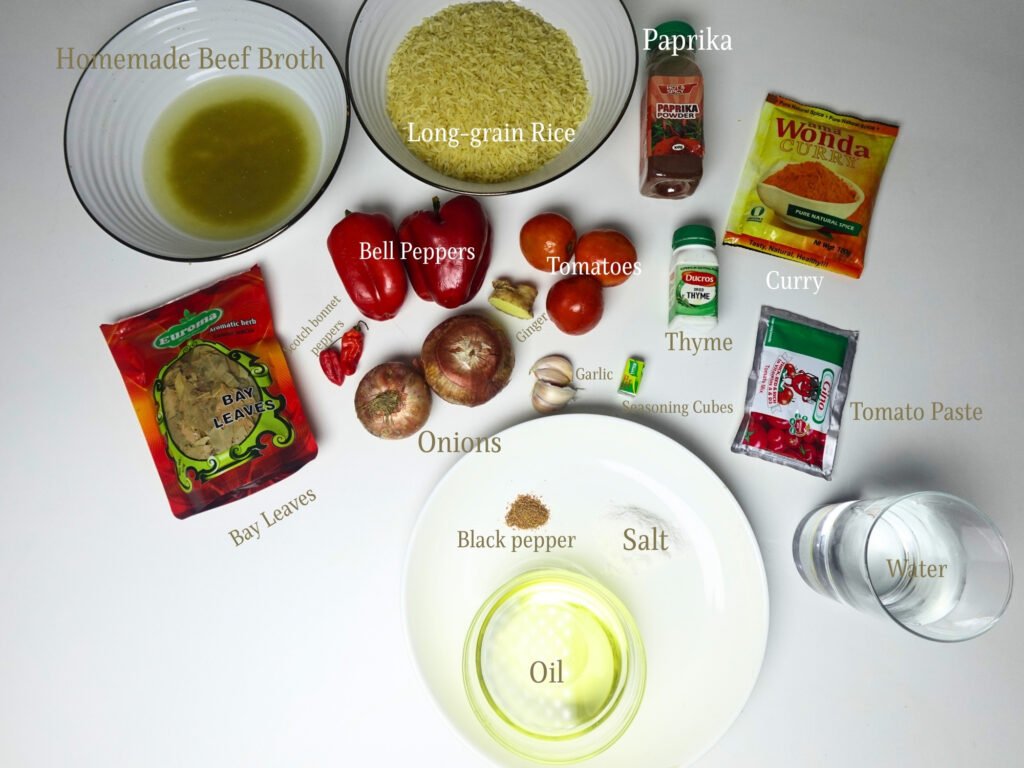
For the charred pepper base
- 2 large red bell peppers (about 300 g)
- 3 medium tomatoes (about 300 g)
- 1 large onion (about 150 g)
- 1–2 Scotch bonnet peppers (15–30 g)
- 4 cloves garlic (about 12 g)
- 15 g fresh ginger
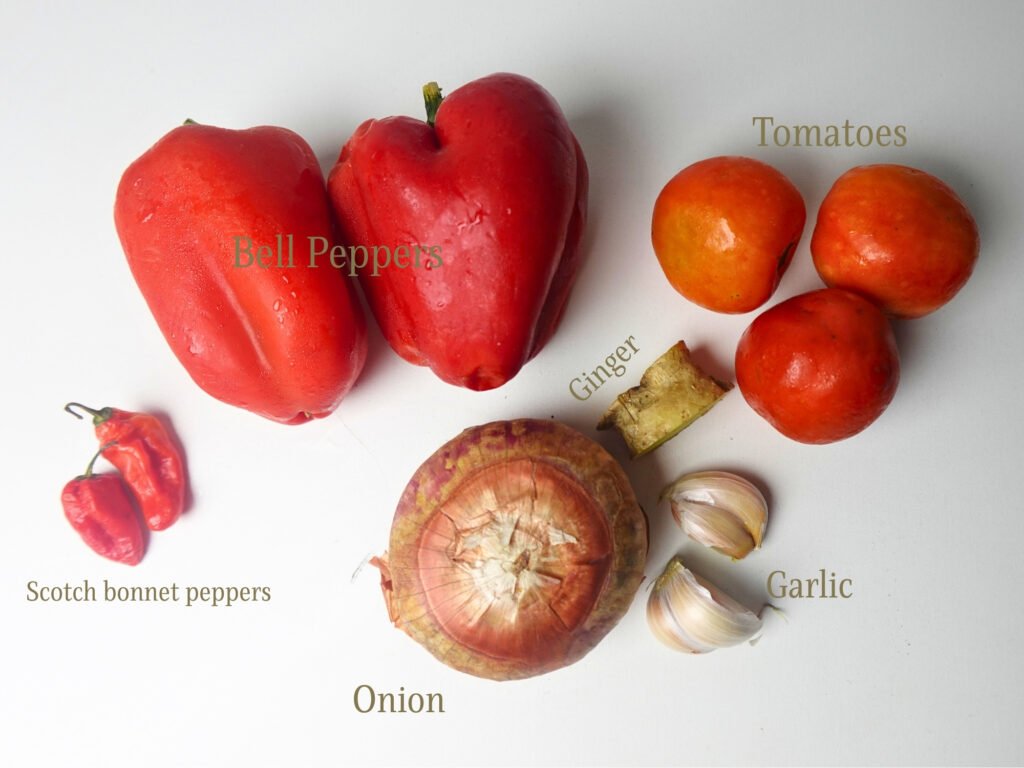
For the jollof rice
- 3 cups (about 600 g) long-grain parboiled rice
- 120 ml vegetable oil
- 30 g tomato paste
- 1 medium onion, sliced (about 100 g)
- 2 seasoning cubes (about 8–10 g total)
- 1 teaspoon (2 g) curry powder
- 1 teaspoon (1 g) dried thyme
- 1 teaspoon (2 g) paprika
- ½ teaspoon (1 g) black or white pepper
- 1 bay leaf
- 1 teaspoon salt, or to taste
- 200 ml beef or chicken stock
- 250 ml water to start
- 100–150 ml extra hot water, as needed
- 15 g butter, optional
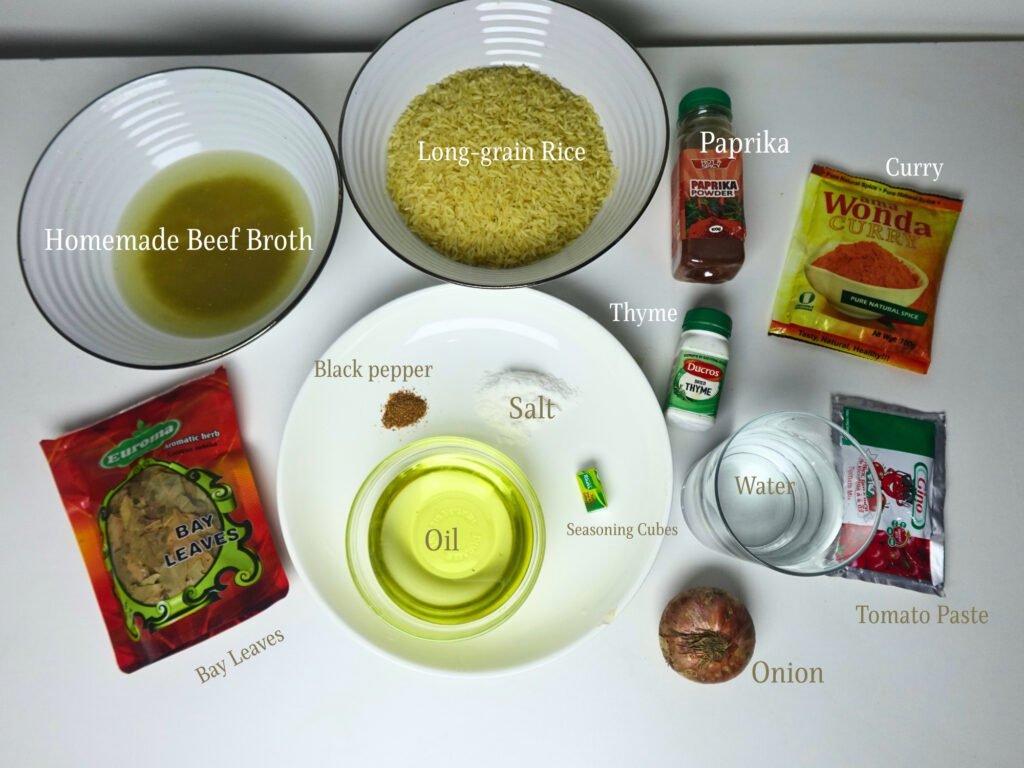
What Kind of Rice Should You Use?
Long-grain rice is the best choice for this recipe.
Long-grain rice holds its shape well while cooking and is much less likely to turn mushy when compared with softer varieties of rice. It also absorbs the pepper sauce beautifully while still giving you individual grains. No short grain or sticky rice please. You can also use basmati but traditionally, regular long-grain rice is used.
How to Make Nigerian Jollof Rice
Prepare the vegetables
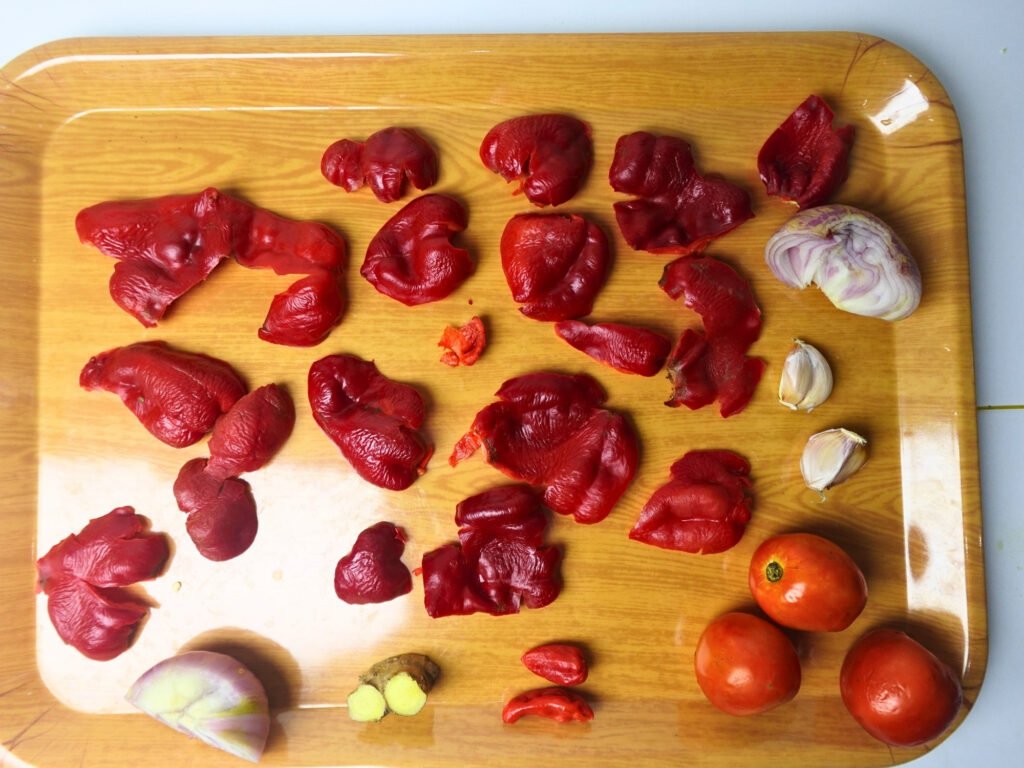
Wash the red bell peppers, tomatoes, onion, and scotch bonnet peppers thoroughly. Pat them dry as much as possible. This is important because we’re going to char them in a dry pan, and vegetables that are very wet will steam instead of developing a good char.
Cut the red bell peppers in half and remove the stems and seeds. Cut the large onion into large chunks.
You don’t need to chop the vegetables into small pieces but I like to make them sizeable. Larger pieces are easier to char without completely as well.
Char the vegetables
Place a large dry frying pan, cast-iron skillet, or grill pan over medium-high to high heat. Do not add oil. Place the bell peppers, tomatoes, onion, and Scotch bonnet peppers directly into the hot pan. For the peppers and tomatoes, place the cut side directly against the hot surface. Let the vegetables cook without constantly moving them. Leave them for about 3 to 5 minutes, or until the side touching the pan develops dark brown and blackened patches.
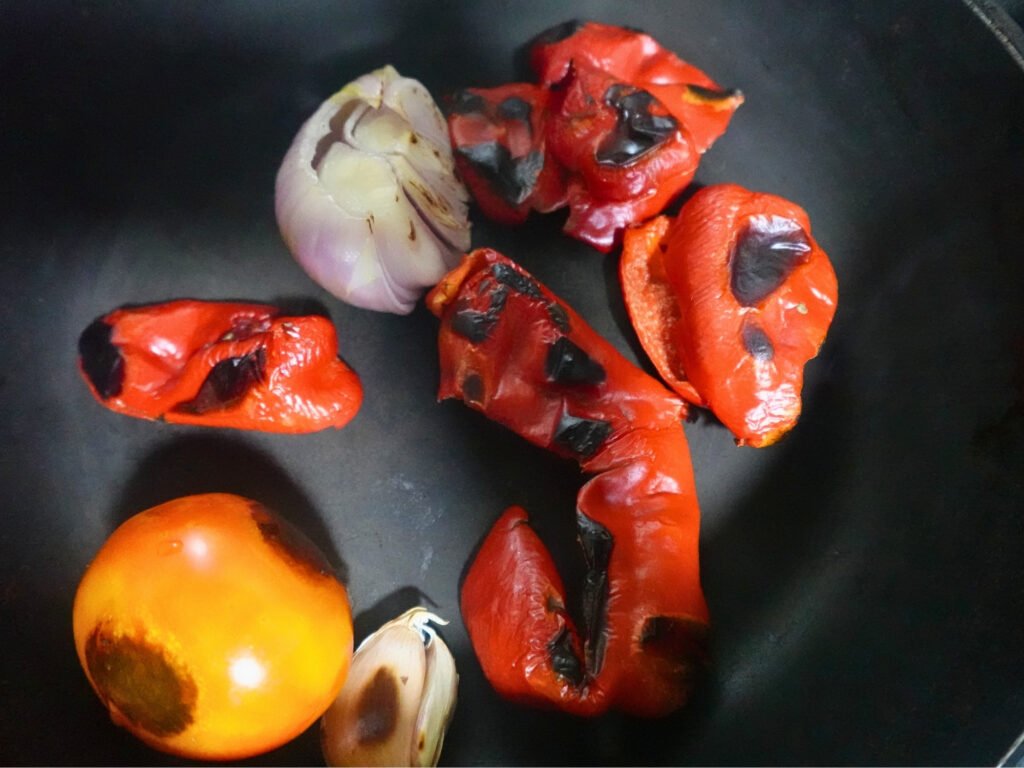
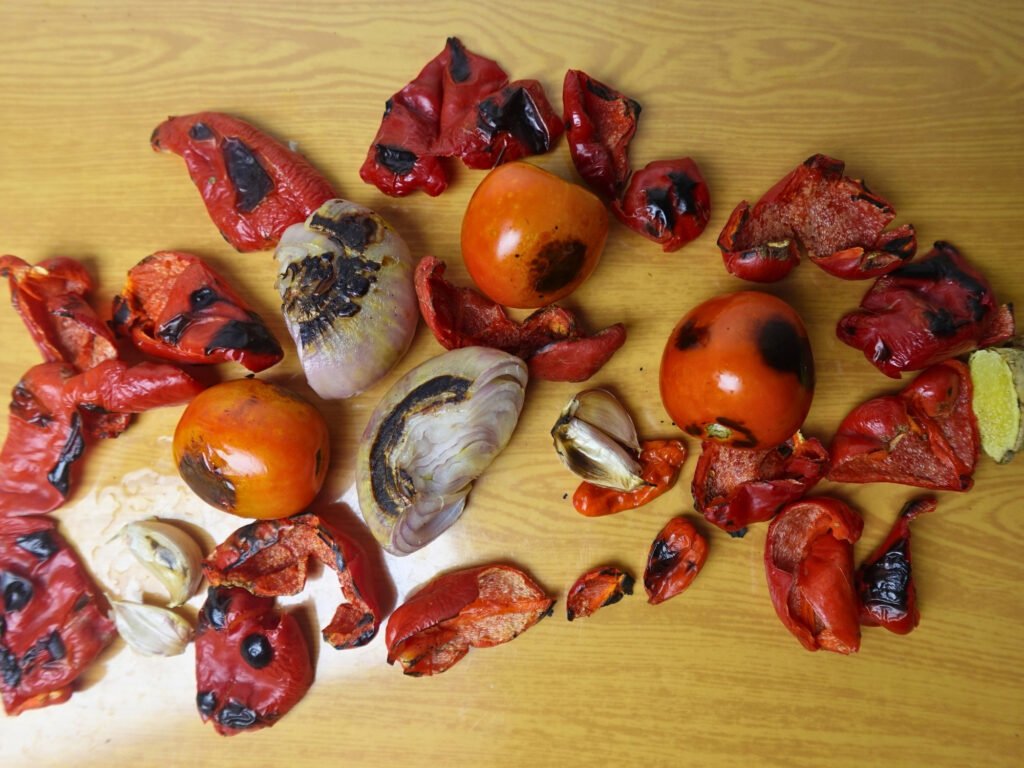
Turn the vegetables using tongs and continue charring the other sides. The goal is not to burn the vegetables completely. You want them softened and roasted with noticeable blackened areas. The blackened patches are what will give your jollof that smoky, roasted flavor.
Once the vegetables are nicely charred, remove them from the pan and allow them to cool slightly.
Blend the charred vegetables
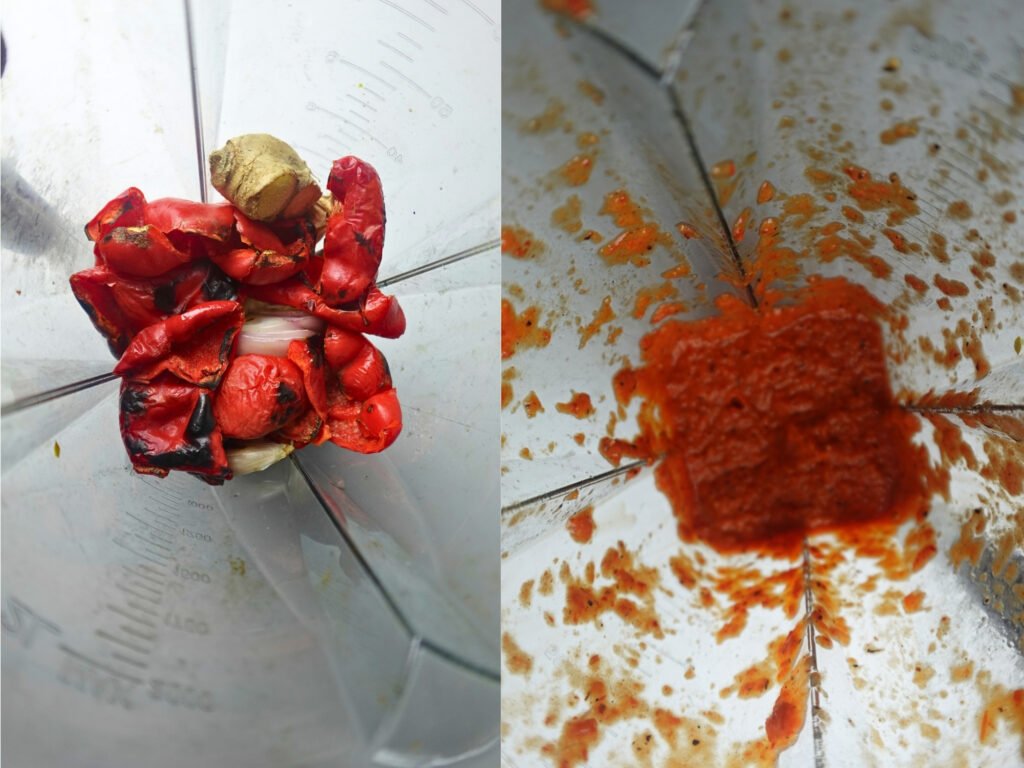
Add the charred bell peppers, tomatoes, onion, and Scotch bonnet peppers to a blender. Add the garlic and ginger.
Blend everything until smooth. Try not to add water unless your blender needs it. The tomatoes and peppers already contain plenty of moisture. If necessary, add just a few tablespoons of water to help the blender move.
Blend till smooth to preferred consistency. I like mine not too smooth because I love seeing the speckles of pepper in my dish. However, ensure that your mixture is fine enough.
Wash the rice
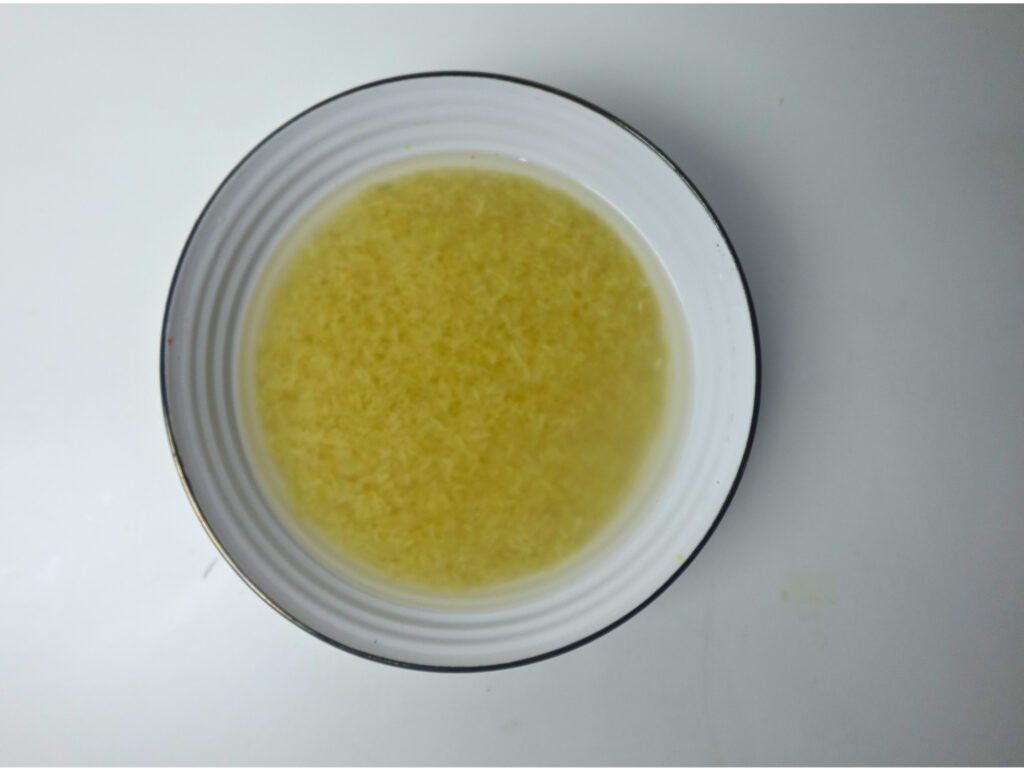
Place the rice into a large bowl. Wash the rice several times with water until the water becomes noticeably clearer. Drain the rice thoroughly and set it aside. You don’t need to soak the rice for this recipe.
Fry the onions
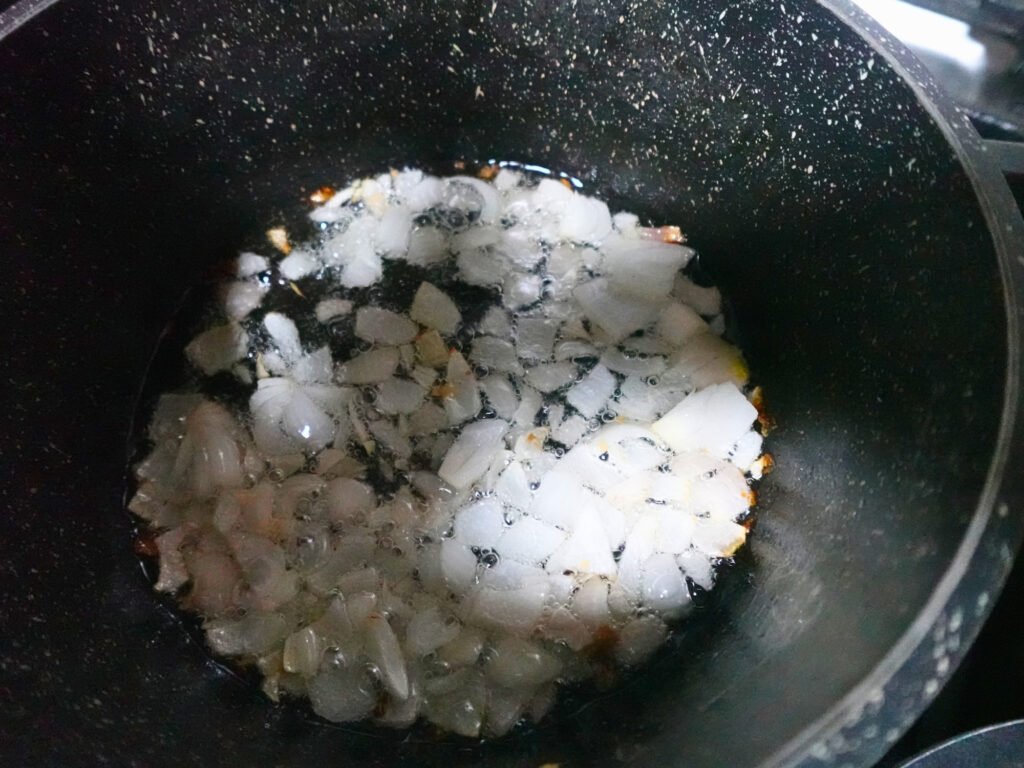
Place a large, heavy-bottomed pot over medium heat. Add the vegetable oil. Once the oil is hot, add the sliced onion. Cook the onions for about 3 to 5 minutes until they soften and become slightly golden.
Fry the tomato paste
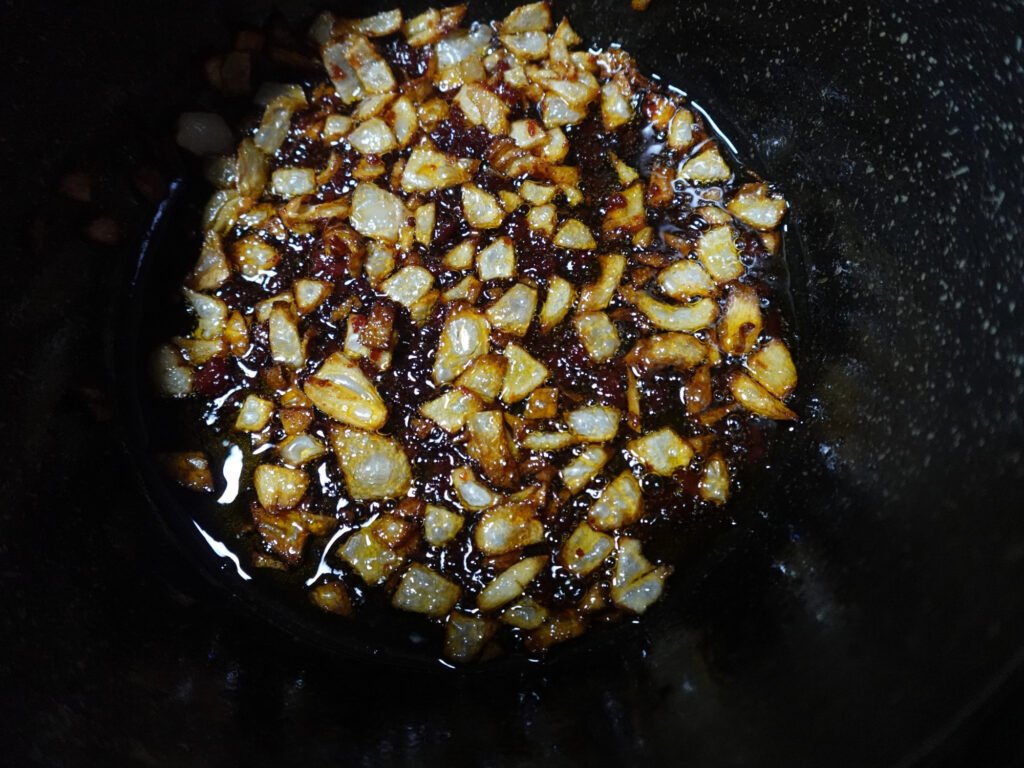
Add the 30 g of tomato paste to the onions. Stir well and fry the tomato paste on low heat for about 5-10 minutes, stirring constantly. Don’t skip this step. Frying tomato paste helps develop a deeper tomato flavor and gets rid of its raw taste.
You want the tomato paste to become slightly darker before moving on to the next step.
Cook the charred pepper mixture
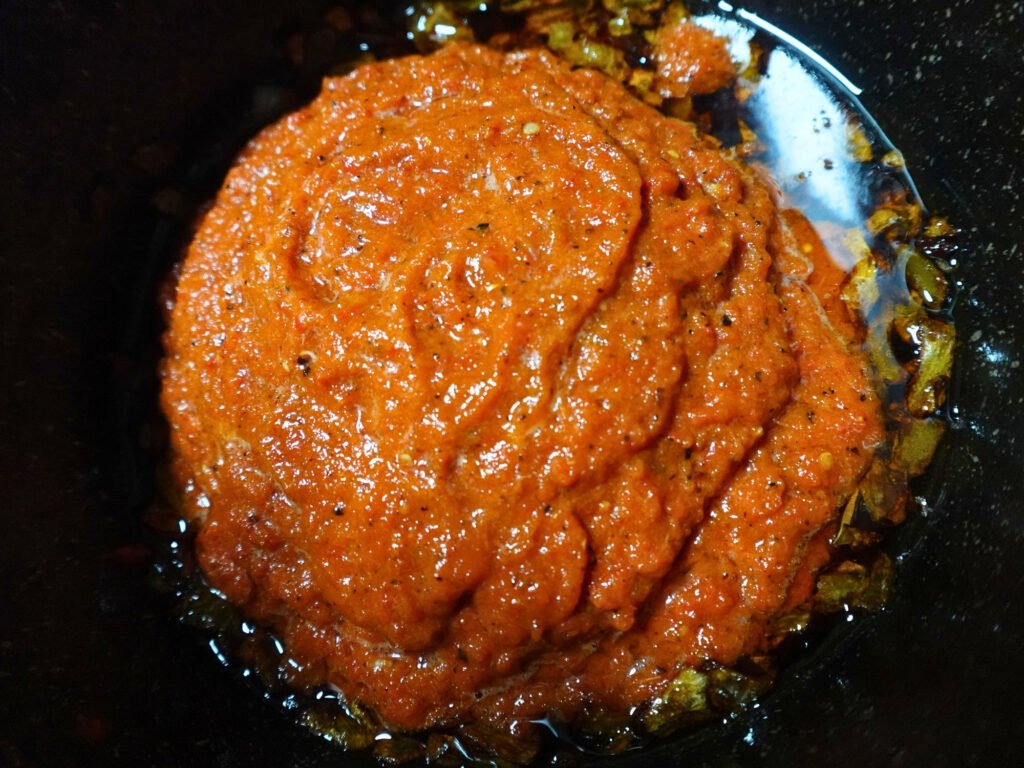
Pour the blended charred pepper mixture into the pot. Be careful when adding it because the hot oil may splatter. Stir everything together. Cook the mixture over medium heat for about 20 to 30 minutes, stirring occasionally. This is one of the most important stages of the recipe.
The pepper mixture should become thicker and darker as it cooks. You should also notice some of the oil beginning to rise to the surface. Don’t rush this step. If the pepper mixture is still watery or smells strongly of raw tomatoes, let it cook for longer.
Cooking the mixture properly concentrates the flavors and prevents your finished jollof rice from tasting watery or overly acidic.
Season the pepper base
Add the curry powder, dried thyme, paprika, black or white pepper, seasoning cubes, bay leaf, and salt. Stir everything together.
Allow the sauce to cook for another few minutes.
Taste the sauce at this point.
It should be well seasoned and taste slightly stronger than you want the finished rice to taste. Once the rice is added, it will absorb some of the seasoning. So over-season! (but don’t over do it) lol. Adjust the salt or seasoning if necessary.
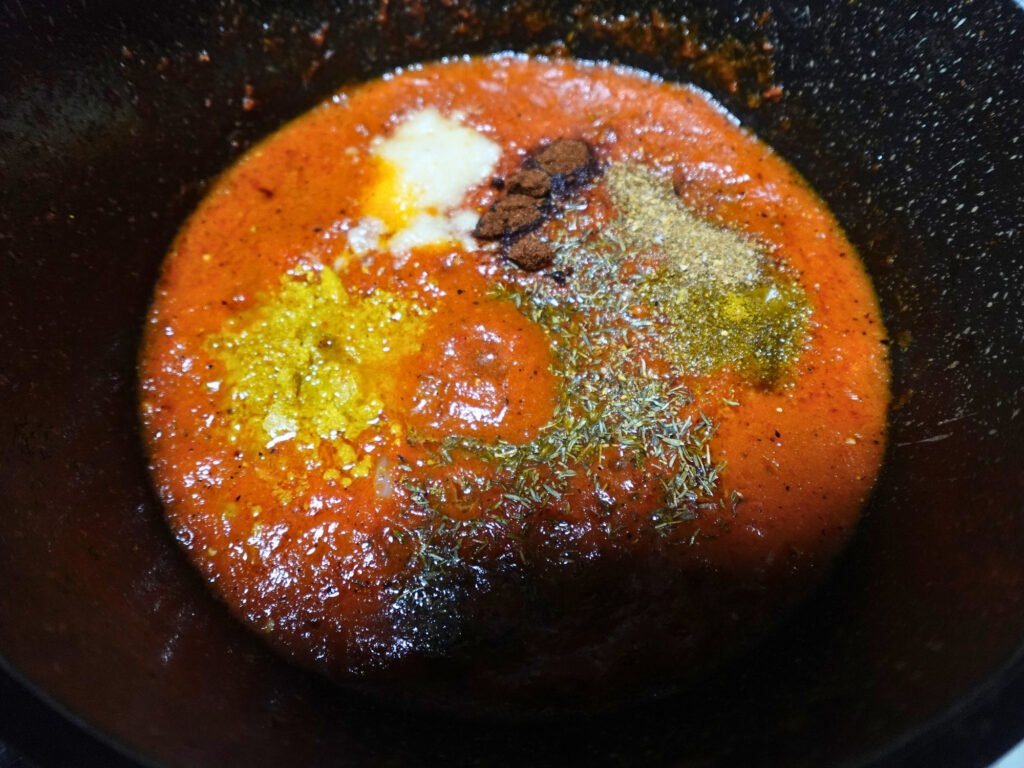
Add the rice
Add the washed and drained rice directly into the pepper mixture. Stir thoroughly until the rice is completely coated in the sauce. Take your time with this step because you want the pepper mixture distributed evenly throughout the rice. Every grain should be coated in the rich tomato and pepper sauce.
Add the chicken stock and water
Pour in the chicken stock and water. Stir gently to combine.
Because the pepper mixture already contains water, you don’t want to add too much liquid at this stage. The rice should be surrounded by liquid, but it shouldn’t be swimming in a large amount of water.
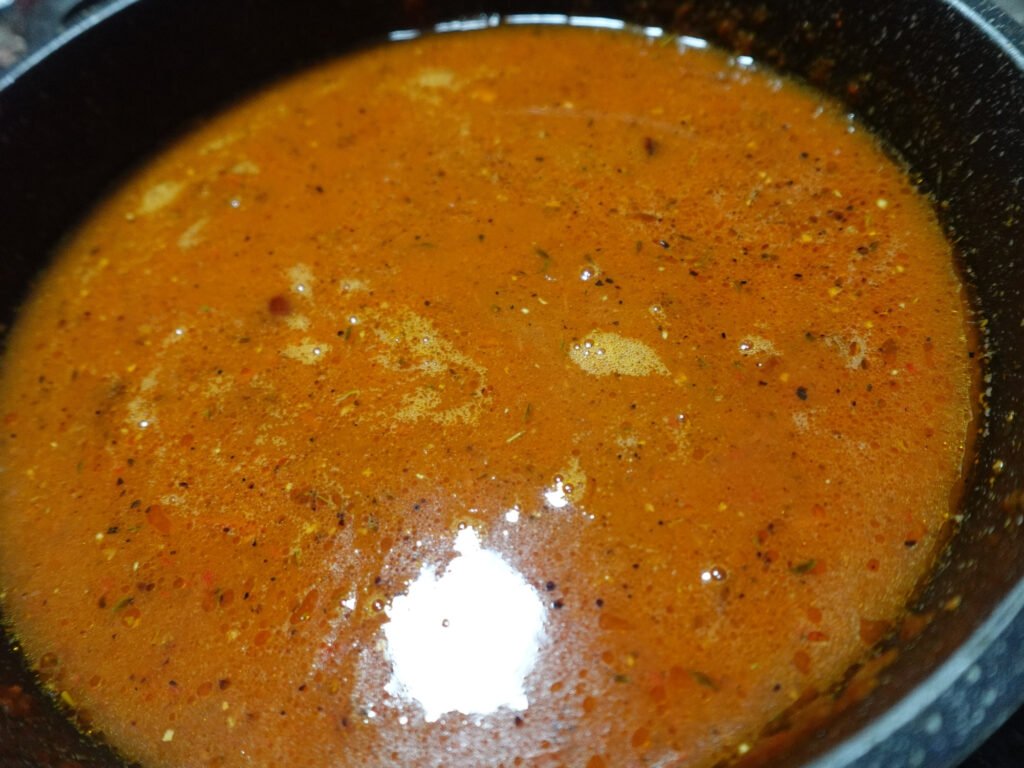
Cover and cook the rice
Bring the rice to a gentle boil over medium heat. Once it begins bubbling, reduce the heat to low. And I mean LOW! Cover the pot tightly with your lid.
The tight-fitting lid helps trap the steam inside the pot and allows the rice to cook evenly without requiring excessive liquid. if you have a lid with holes, please use foil underneath it. We want no heat to escape.
Let the rice cook for about 25 to 35 minutes. Try not to open the pot repeatedly because every time you remove the lid, steam escapes.
Check the rice
After about 25 minutes, carefully check the rice.
If the rice is still hard or undone and the pot is completely dry, add about 50 to 60 ml of hot water. Cover the pot again and continue cooking. Continue adding small amounts of water only when necessary.
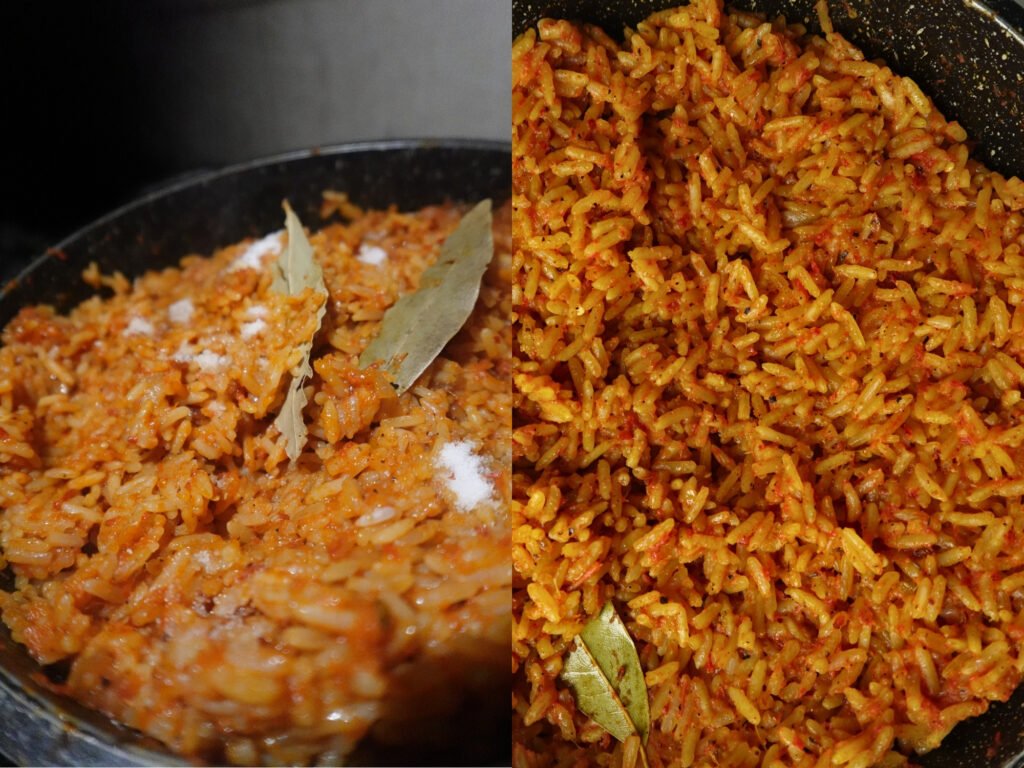
The exact amount of liquid required can vary depending on your rice, how much water remained in your pepper mixture, and how tightly your pot holds steam. The goal is tender, fluffy rice rather than rice that has been boiled in excess liquid.
Let the bottom become smoky
Once the rice is almost completely cooked, you can allow the bottom of the pot to develop a lightly toasted layer.
Increase the heat slightly for a few minutes while keeping a close eye on the pot.
The bottom should develop a lightly toasted, smoky flavor. Basically, let it burn but don’t let it burn completely. That slightly toasted layer is part of what gives Nigerian party-style jollof its characteristic smoky flavor. Since we already charred the vegetables, you should have plenty of smoky flavor even without intentionally burning the rice.
Finish the rice
Once the rice is completely tender, turn off the heat. If you’re using butter, add the 15 g butter.
Gently fluff the rice with a fork or rice paddle. Don’t aggressively stir the rice because you don’t want to break up the grains. Taste and adjust the seasoning if necessary. Cover the pot again and allow the jollof rice to rest before serving.
This gives the rice a chance to finish steaming and allows the flavors to settle.
How to Get the Best Smoky Flavor
The smoky flavor in this recipe comes from two places: the charred vegetables and the lightly toasted bottom of the rice.
When charring the vegetables, don’t be afraid of dark patches. That’s exactly what you’re looking for. However, don’t completely burn the vegetables. You want roasted vegetables with blackened areas, not vegetables that have turned into ash. The dry pan is important because adding oil would cause the vegetables to fry rather than properly char.
You should also avoid constantly moving the vegetables around the pan. Let them sit against the hot surface long enough to develop those charred spots.
Why Do You Cook the Pepper Base Before Adding the Rice?
You might be tempted to blend the vegetables, add them to the pot, and immediately throw in the rice, but cooking the pepper mixture first makes a big difference.
Raw tomatoes and peppers contain a lot of water. Cooking the blended mixture allows some of that water to evaporate and concentrates the flavors.
It also cooks out the raw tomato taste. By the time you add the rice, the pepper mixture should already taste rich and well seasoned.
This gives the rice a much deeper flavor.
Why Is My Jollof Rice Mushy?
The most common reason jollof rice becomes mushy is too much liquid.
Remember that your pepper mixture already contains water, so you don’t need to add the same amount of liquid you would use when cooking plain rice. That’s why this recipe starts with only 200 ml chicken stock and 250 ml water.
If the rice needs more liquid later, add hot water gradually. It’s much easier to add more liquid than to fix rice that has already absorbed too much.Constantly stirring the rice can also make it mushy, so try to leave it alone while it cooks.
Why Is My Jollof Rice Hard?
If your rice is still hard after the initial cooking time, don’t panic.
If the pot is dry, add 50 to 60 ml of hot water, cover the pot tightly, and continue cooking over low heat. The trapped steam will help finish cooking the rice.
If the rice is only slightly firm, you may not need much additional liquid at all. Simply cover the pot and let it continue cooking gently.
Why Is My Jollof Rice Not Red Enough?
The color of your jollof depends on the color and quantity of the tomatoes and red bell peppers, as well as how well you cook the pepper mixture.
For this recipe, the combination of 2 large red bell peppers, 3 tomatoes, and tomato paste gives the rice a rich red-orange color.
Cooking the tomato paste before adding the pepper mixture also helps deepen the color. If your pepper mixture looks pale, allow it to cook longer before adding the rice.
Can I Make This Jollof Rice Spicier?
Absolutely. The Scotch bonnet peppers are responsible for most of the heat in this recipe.Use one Scotch bonnet for a milder jollof or two to four for a hotter version.
If you love very spicy food, you can add more, but remember that the heat can become stronger as the pepper mixture cooks.
What Can I Serve With Jollof Rice?
Jollof rice is incredibly versatile and can be served with almost anything.
Some popular options include fried chicken, grilled chicken, fried beef, grilled beef, fried fish, grilled fish, fried plantains, coleslaw, moi moi, Nigerian salad, or peppered meat.
For an easy everyday meal, serve the jollof with fried plantain and chicken. For a party-style plate, you can serve it with fried chicken, plantain, coleslaw, and moi moi.
You can also enjoy the rice by itself because the pepper base makes it flavorful enough to stand alone.
Can I Use Water Instead of Chicken Stock?
Yes.
If you don’t have chicken stock, simply replace the 200 ml chicken stock with 200 ml water. The rice will still be flavorful because most of the flavor comes from the charred pepper base, tomato paste, seasonings, and spices. However, if you have chicken stock available, using it adds an extra savory depth.
Can I Make Jollof Rice Ahead of Time?
Yes.
Jollof rice is an excellent make-ahead meal. You can prepare it several hours before serving and keep it covered. It can also be reheated gently before serving. In fact, many people find that jollof tastes even better after sitting for a little while because the flavors have more time to settle into the rice.
How to Store Leftover Jollof Rice
Allow leftover jollof rice to cool before transferring it to an airtight container. Store it in the refrigerator for up to 3 to 4 days.
For longer storage, divide the rice into portions and freeze it in freezer-safe containers or bags. When reheating refrigerated jollof rice, add a small splash of water before reheating and cover it. This helps prevent the rice from drying out. Make sure the rice is reheated until it is steaming hot throughout.
Can You Freeze Jollof Rice?
Yes, jollof rice freezes very well. Allow it to cool completely before dividing it into individual portions. Place the portions into airtight freezer-safe containers or bags and freeze for up to 2 to 3 months for the best quality.
Thaw frozen rice in the refrigerator before reheating, or reheat it directly from frozen with a small amount of water or in the microwave (this might change the texture a little bit)
Recipe Tips
- Don’t skip the charring step if you want a smoky jollof. Those blackened patches on the vegetables are what give the pepper base its roasted flavor.
- Don’t completely burn the vegetables. You want charred patches, not ash.
- Cook the pepper mixture until it becomes thick and the oil begins to rise to the surface.
- Taste the sauce before adding the rice. It should already be delicious and well seasoned.
- Start with the 200 ml chicken stock and 250 ml water. Add extra hot water only if the rice needs it.
- Keep the heat low once the rice begins cooking.
- Avoid opening the pot repeatedly because you need the steam to cook the rice.
- Don’t stir the rice constantly. Gentle cooking gives you better-looking grains.
- Let the finished jollof rest for 5 to 10 minutes uncovered before serving.
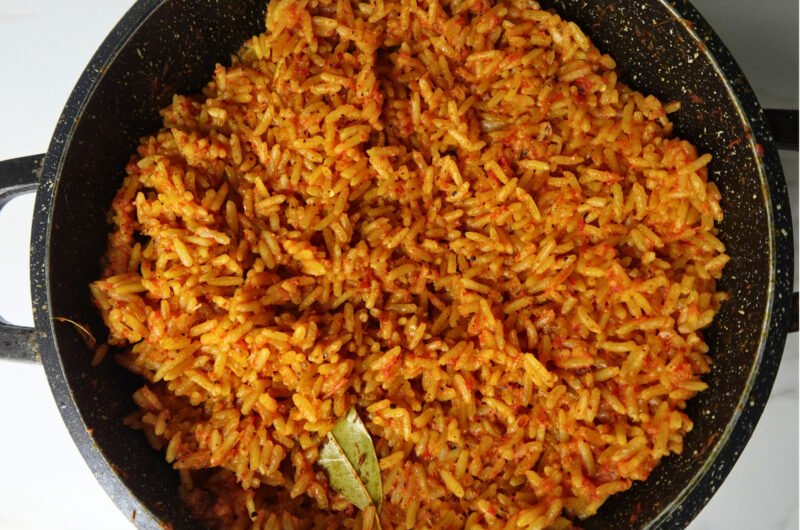
Nigerian Jollof Rice
Course: All Recipes4
servings30
minutes40
minutes300
kcalIngredients
- Pepper Base
2 large red bell peppers (300 g)
10- 15 g fresh ginger
4 cloves garlic (12 g)
1–2 Scotch bonnet peppers (15–30 g)
1 large onion (150 g)
3 medium tomatoes (300 g)
- For the Jollof Rice
600 g long-grain parboiled rice
120 ml vegetable oil
30 g tomato paste
100 g sliced onion
2 seasoning cubes (8–10 g)
2 g curry powder
1 g dried thyme
1 g black or white pepper
1 bay leaf
1 teaspoon salt, or to taste
200 ml chicken stock
250 ml water
100–150 ml extra hot water, only if needed
15 g butter, optional
Directions
- Wash and dry the bell peppers, tomatoes, onion, and Scotch bonnet peppers.
- Cut the bell peppers and tomatoes in half and cut the onion into large chunks.
- Heat a dry frying pan over medium-high to high heat. Do not add oil.
- Place the vegetables directly into the hot pan and char for 3–5 minutes per side, turning them until they develop dark brown and blackened patches.
Remove the charred vegetables from the pan and allow them to cool slightly. - Add the charred vegetables to a blender along with the garlic and ginger. Blend until smooth, adding only a small amount of water if necessary.
- Wash the rice several times until the water becomes noticeably clearer. Drain well.
- Heat the vegetable oil in a large heavy-bottomed pot over medium heat.
- Add the sliced onion and cook for 3 to 5 minutes until softened and fragrant.
- Add the tomato paste and fry on low heat for 5-10 minutes stirring consistently.
- Pour in the blended charred pepper mixture and cook for 20 to 30 minutes, stirring occasionally, until thickened and darker.
- Add the curry powder, thyme, paprika, black or white pepper, seasoning cubes, bay leaf, and salt. Stir and cook for another 2 to 3 minutes.
- Add the washed rice and stir until every grain is coated in the pepper mixture.
Also add chicken stock and water. Stir gently. - Bring to a gentle boil, then reduce the heat to low. Cover the pot tightly with the lid (no-hole lid). If your pot has a hole, please use foil before you cover the pot.
Cook for 25 to 35 minutes. - Check the rice. If it is still hard and the pot is dry, add 50 to 60 ml hot water, cover, and continue cooking. Repeat only if necessary.
- Once the rice is tender, optionally allow the bottom to toast lightly for a few minutes to develop additional smoky flavor.
- Turn off the heat and add the butter if using.
Gently fluff the rice, cover the pot, and let it rest for 5 to 10 minutes before serving. - Serve your smoky Nigerian jollof rice hot with fried chicken, grilled chicken, fried plantains, beef, fish, coleslaw, moi moi, or your favorite side dishes.

Leave a Reply